
Most homeowners never set foot in their crawl space, which is exactly why crawl space water problems tend to go unnoticed until the damage is already done. Out of sight beneath the floor, a few inches of standing water can sit on the vapor barrier for weeks, quietly soaking the insulation, subfloor, and joists that hold your Nashville home up. Renew Restoration provides 24/7 crawlspace water extraction across Nashville and Middle Tennessee. We pump out the water, strip out what the water ruined, dry the space back to a stable moisture level, and document the loss for your insurance. The sooner that wet space is found and dried, the less of your floor system it can take with it.
Standing Water on the Vapor Barrier
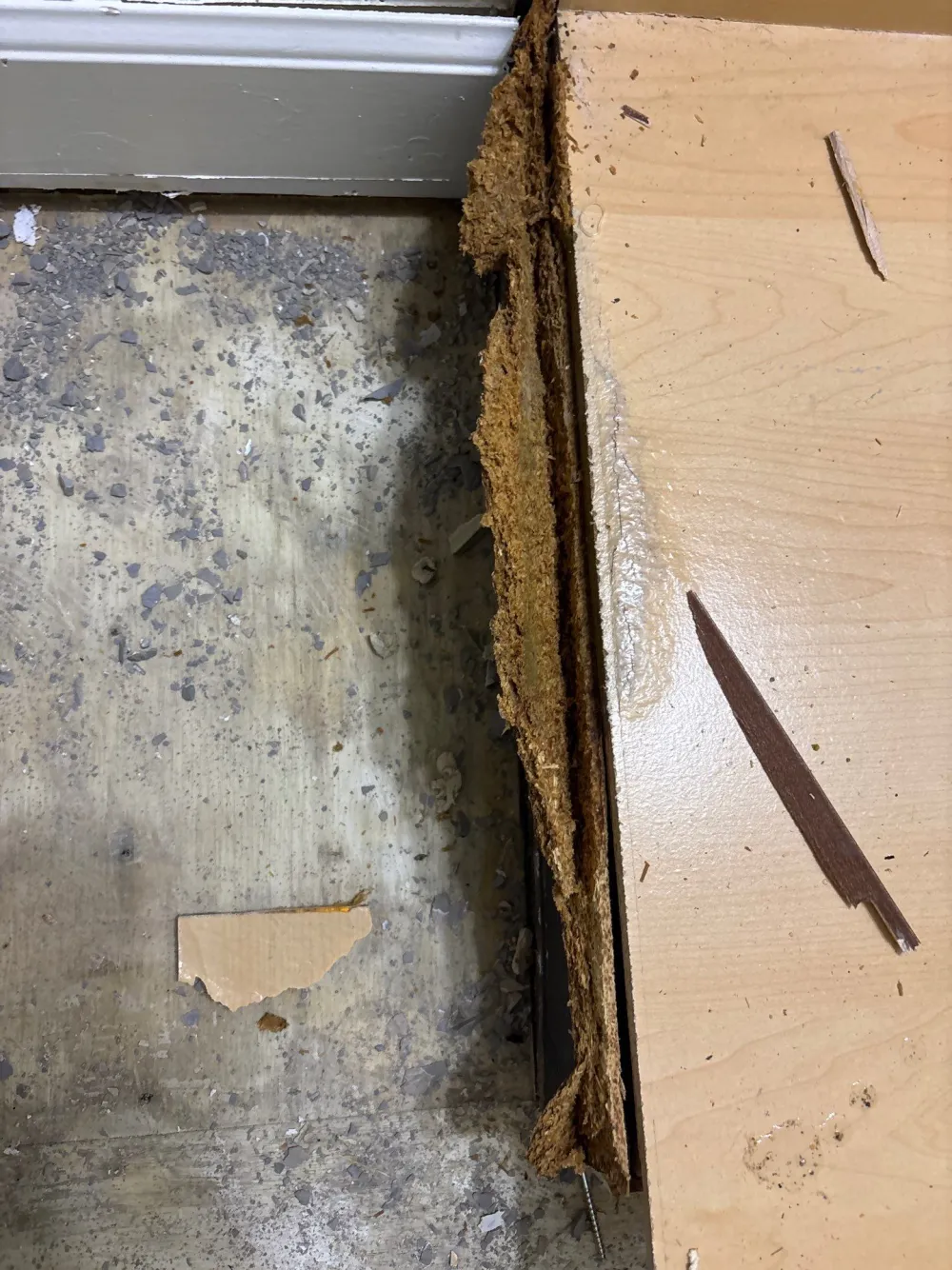
The most common thing we find in a wet crawl space is water pooled right on top of the plastic vapor barrier. That sheet of poly is laid across the dirt floor to keep ground moisture from evaporating up into the house, and it does its job well. When water actually gets in, though, that same barrier holds it in place like a shallow pool instead of letting it soak into the earth. So you end up with a sheet of standing water spread across the crawl space floor, sitting directly under your subfloor. Sometimes it is a thin film you would barely notice, sometimes it is two or three inches deep with insulation drooping down into it. Either way it is a problem, because that water is now evaporating into a closed, poorly ventilated space and pushing the humidity under your house toward saturation.
Why Nashville Crawl Spaces Take On Water
Water reaches a crawl space a few different ways, and Middle Tennessee gives it plenty of chances. Ground seepage is the big one. After a stretch of heavy Nashville rain, the clay-heavy soil around and under your foundation saturates, the water table climbs, and water works through the vented block walls and up through the dirt floor. Poor drainage makes it worse, so a downspout dumping against the foundation or a yard that slopes toward the house instead of away from it will push water straight into the crawl space. The other frequent source is plumbing. A lot of a home's supply and drain lines run through the crawl space, and a pipe that starts weeping or a fitting that lets go up there rains down onto the vapor barrier for as long as it takes someone to notice. Nashville has a large stock of older homes on pier-and-beam and block-pier foundations, and those open, vented crawl spaces are the ones we see flooded most often after a big storm.
Saturated Insulation, Subfloor, and Framing
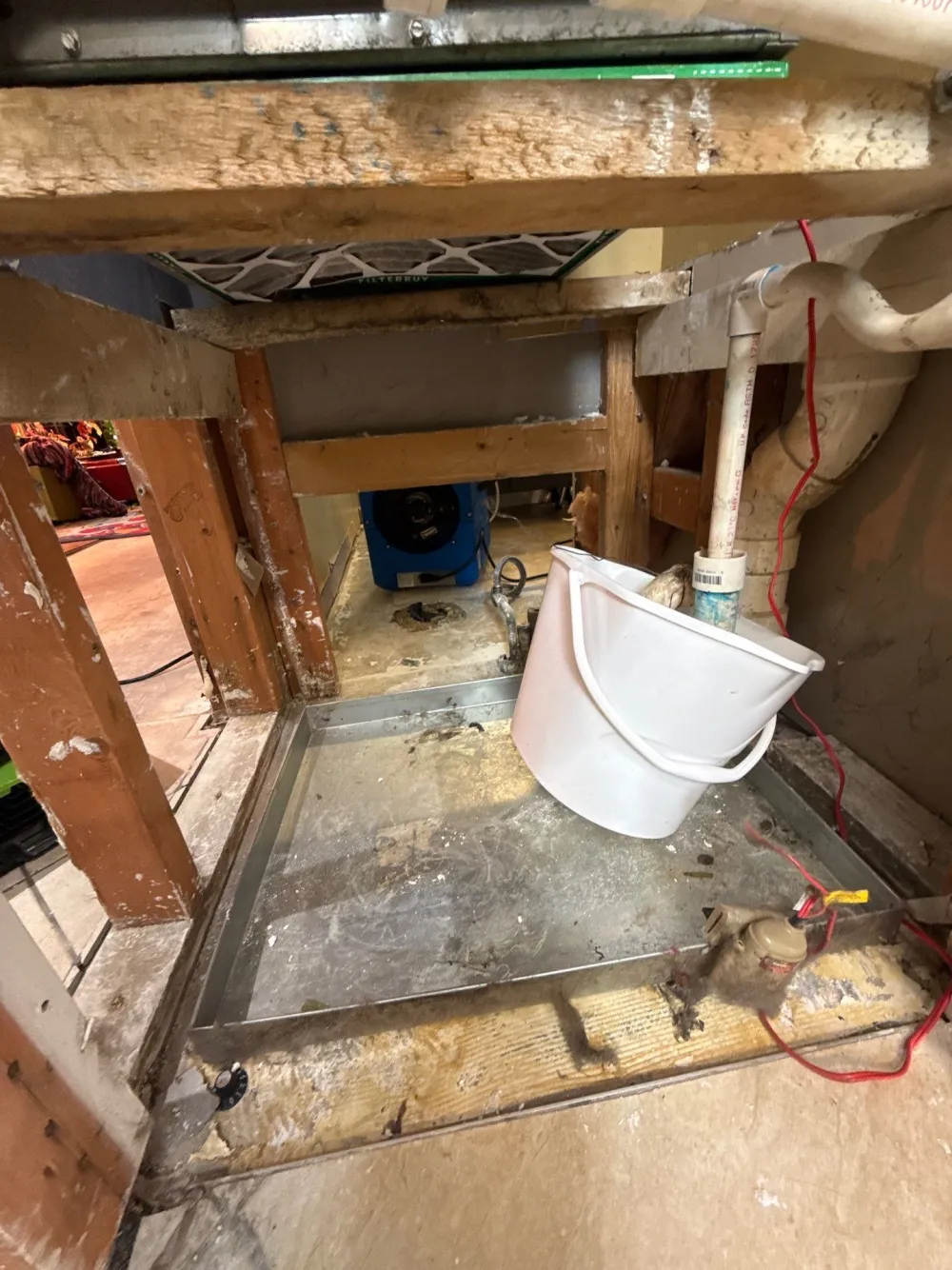
The standing water is only the part you can see. The real damage in a crawl space happens in the wood and insulation above it. Fiberglass batt insulation is usually stapled up between the floor joists, and once it gets wet it loses much of its insulating value, gets heavy, and sags out of the bays until it is hanging down into the water, doing nothing but holding moisture against the subfloor. That subfloor, the plywood or plank decking your finish floor is nailed to, wicks the moisture upward, and given enough time it swells, delaminates, and rots. The joists and beams carrying the load take on moisture the same way, and a chronically wet crawl space is how you end up with soft, bouncy floors, hardwood that cups in the rooms above, and framing that has to be sistered or replaced. We remove the sodden insulation, get the moisture out of the wood before it fails, and dry the framing back to a normal reading so the damage stops at the crawl space instead of climbing into your finished floors.
Getting Water Out of a Space You Can Barely Stand In
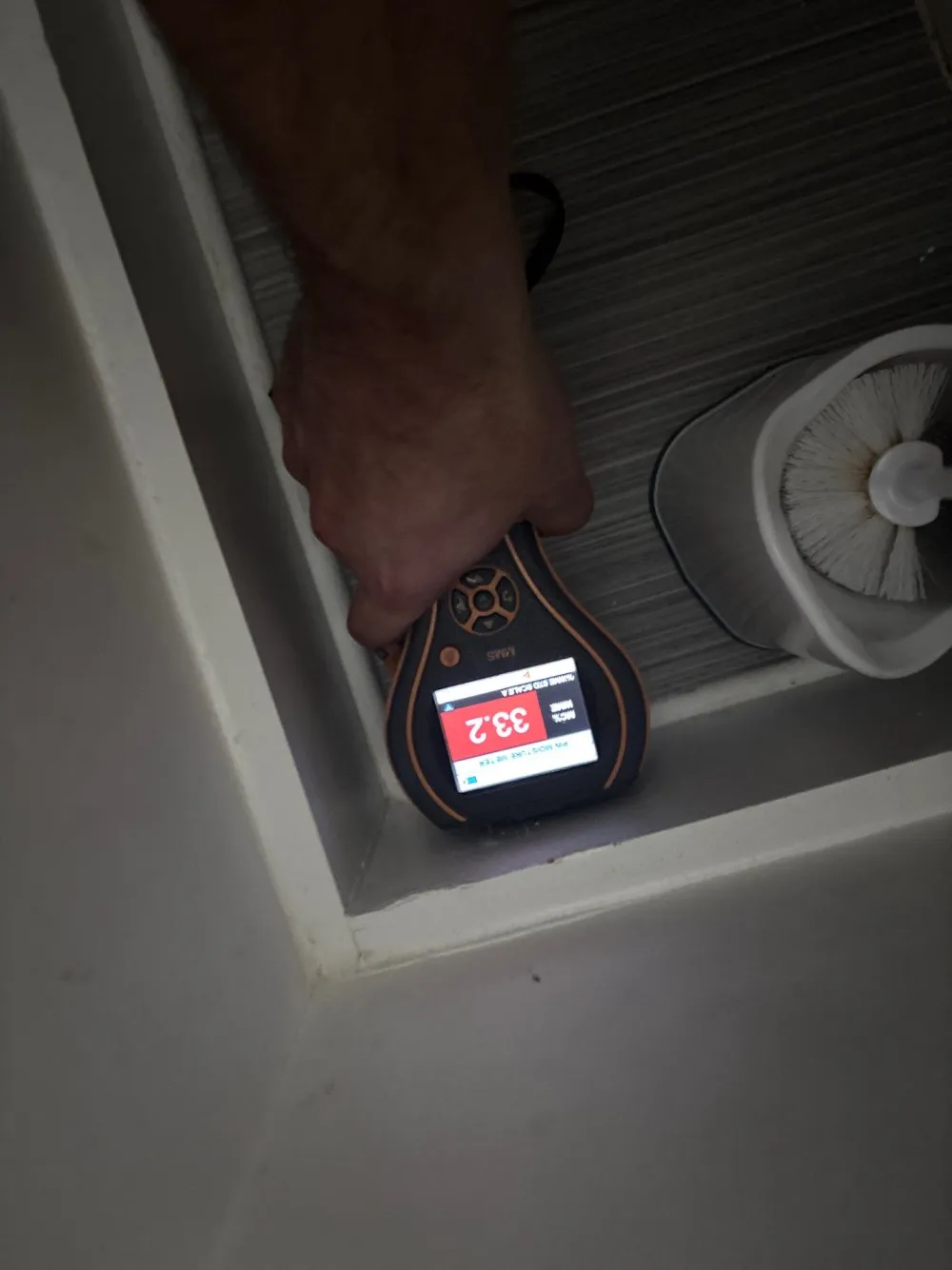
Extracting water from a crawl space is as much about access as it is about the water itself. These are tight, low spaces, often only two or three feet of clearance, with a dirt or gravel floor and a maze of piers, ducts, and pipes to work around, so this is not a job you do standing up. Our crews pull hoses, pumps, and extraction equipment into the space and work on their hands and knees to reach every low spot where water has collected on the barrier. We start by identifying where the water came from and what category it is, because clean ground seepage and water from a failed drain line are not handled the same way. The source of the water dictates the protocol. From there we pump and extract the standing water, pull out the vapor barrier where it is trapping water or contaminated, and haul out the ruined insulation and any debris the water left behind so the space is clear enough to dry.
Drying the Crawl Space and Sealing It Back Up
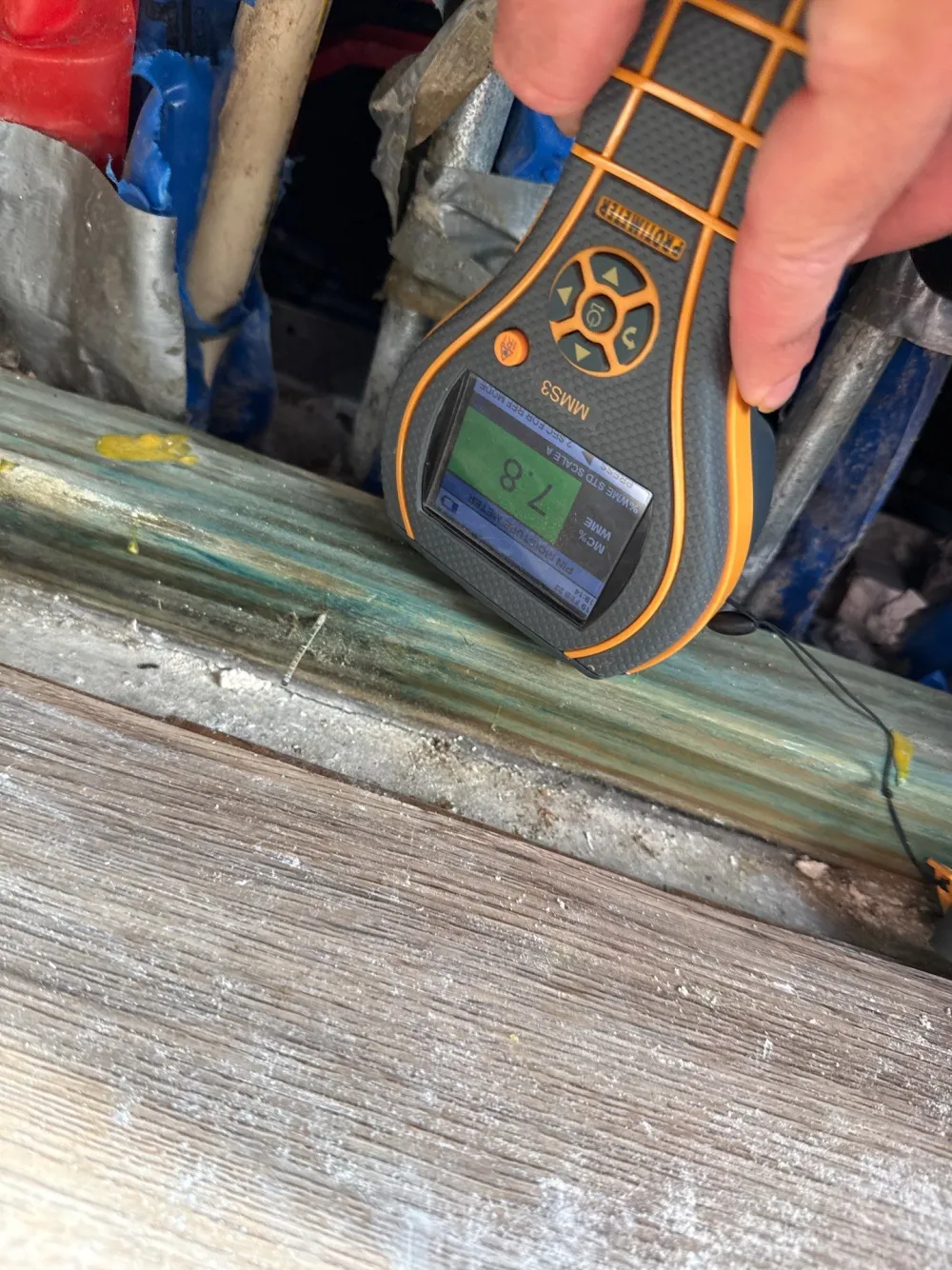
Once the water and ruined materials are out, drying a crawl space takes the right equipment in a confined space. We set commercial air movers to push air across the framing and low-grain refrigerant dehumidifiers to pull the moisture out of the air rather than just stir it around, and we dry the structure out until moisture meters confirm the subfloor, joists, and beams are back to a stable level. Because crawl space moisture rises, the drying does not always stop at the floor system. If dampness has wicked up into the walls above, drying the wall cavities gets the moisture out of the stud bays before it causes trouble higher in the house. When the structure is dry, we lay down a fresh vapor barrier over the ground. A crawl space that keeps taking on water is a candidate for full encapsulation, where the ground and walls are sealed and a dehumidifier keeps the space conditioned, and we can walk you through whether that is the right long-term fix. Treating a wet crawl space as time-sensitive mitigation rather than a someday project is what keeps a one-time leak from turning into a rebuild.
A Wet Crawl Space Is the Whole House's Problem
It is easy to ignore a problem you cannot see, but a wet crawl space does not stay in the crawl space. Air moves upward through a house, so the damp, musty air under your floor gets drawn into your living space, driving up indoor humidity and carrying that telltale musty smell into the rooms above. Left alone, a saturated crawl space works on your floors, your framing, and your air quality all at once, which is why we treat it as an emergency and run 24/7. Renew Restoration is a local, IICRC certified, licensed and insured restoration company based in Nashville, and we are biohazard certified for the jobs where crawl space water turns out to be contaminated by a failed sewer line. Crawlspace extraction is one piece of our full range of water damage restoration services, so whatever we find under your floor, we have the equipment and certification to see it through. If your home has a basement as well, or instead, our basement extraction crew brings the same urgency to below-grade flooding.
Frequently Asked Questions
There is standing water on my crawl space vapor barrier. Is that a problem?
Yes, it is. That plastic sheet is meant to block ground moisture, but when water actually gets in, it traps the water on top instead of letting it drain away. So it sits directly under your subfloor and evaporates into a closed space, driving the humidity under your house up and keeping your insulation and framing wet. The longer it sits, the more it costs to fix, so it is worth extracting promptly.
How do you get water out of a crawl space that is only a few feet tall?
We bring the pumps and extraction hoses into the space and work low, on hands and knees, to reach the water pooled on the vapor barrier. Clearance under a house is often only two or three feet, so our crews are used to working around piers, ducts, and pipes in tight quarters. We pump out the standing water, then pull the saturated vapor barrier and insulation so the space is clear enough to dry.
Do you have to remove the wet insulation under my floor?
Usually, yes. Fiberglass batt insulation stapled between your floor joists acts like a sponge once it gets wet. It loses much of its insulating value, sags out of the bays, and holds moisture against the subfloor, so drying it in place is rarely worth it. We pull the soaked insulation out, dry the framing behind it, and that clears the way for new insulation once the crawl space reads dry.
Will homeowners insurance cover crawl space water removal?
It depends on the source. A sudden failure like a burst supply line under the house is usually covered by a standard policy, while water that seeps in from the ground during heavy rain is treated as flooding and typically needs separate flood coverage. We document the source, moisture readings, and full scope from the first visit, so your adjuster has what the claim needs to move forward.
How much does crawl space water extraction cost?
Cost depends on how much water is in the space, how far it has spread, the category of the water, and how much insulation and vapor barrier have to come out. Clearing light seepage from a small crawl space is far simpler than drying one where the insulation and subfloor are saturated. We lay out a clear scope before any work begins and document everything for insurance, since a covered loss can mean little out of pocket for you.